
Nagasaki Biopark must be capybara heaven. It’s one place on earth where the capybaras really are so chill that you can push a baby carriage right up to them as the herd roams their spacious enclosure. In winter they soak in a custom capybara hot tub, or onsen in Japanese.
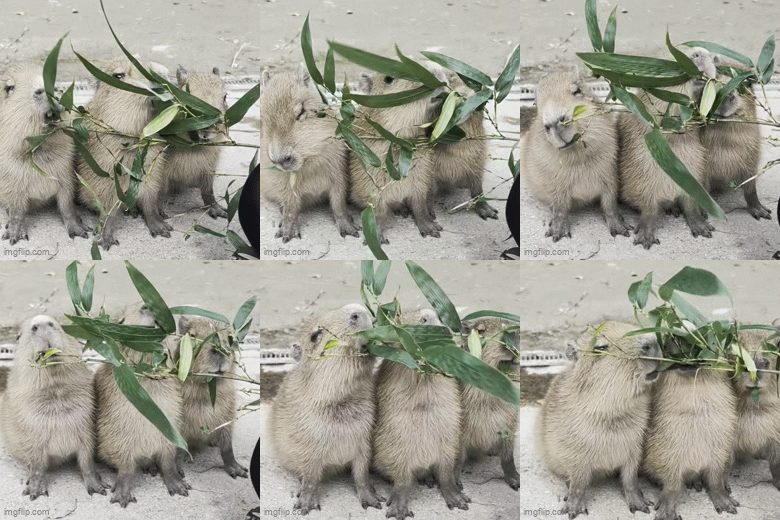
This herd is carefully managed to make this possible. Adult male capybaras can become aggressively territorial, and sometimes these surplus males are housed separately. Zoo breeding programs are carefully orchestrated to preserve bloodlines and prevent inbreeding, so sometimes they are traded with other zoos. In any case, these are tame wild animals (not domestic) that have been raised in this environment, so the mother capybaras are unconcerned by the attention the babies receive from visitors. (Note that young children are not allowed in the capybara zone.)
A friend of mine recently visited the capybaras at Nagasaki Biopark and I’m insanely jealous. He sent lots of photos and videos, so stay tuned! I am so enamored of capybaras, I had no idea they have other animals, too. It is a zoo, after all! This month, it’s all about the capybaras.
-
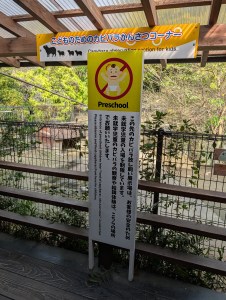
- Entrance of preschool children into “Yard of capybaras – the next zone” is restricted. Please observe and feed capybaras from here for children.
-
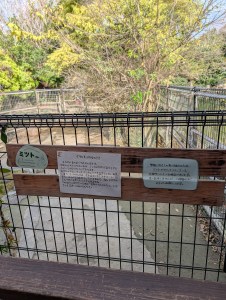
- Male capybara, housed separately, no doubt.
-

- Do you see how to spell “capybara” in Japanese? How about Chinese, and is that Korean?
-
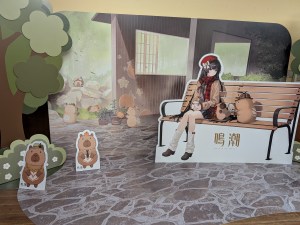
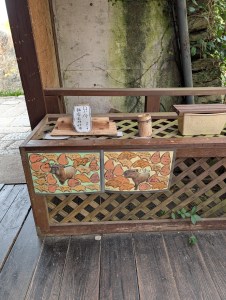
- What I wouldn’t give for this wallpaper!
-
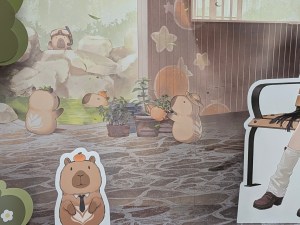
- Look carefully at the floor to see where the wallpaper starts.
Nagasaki Biopark is unique in that visitors may enter the”Capybara Zone” and mingle freely with the herd. “Capybara Encounters” at American zoos are becoming more popular but that means the zoos can get away with hefty ticket prices, and appointments aren’t usually available “day of.” You had best get your reservation well in advance and time your zoo visit accordingly.
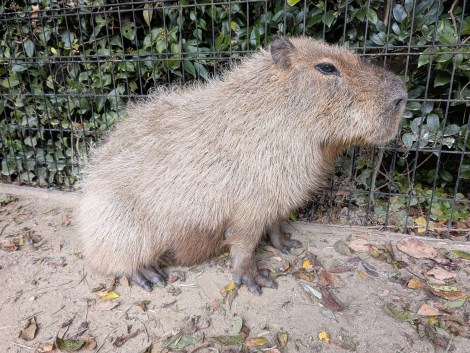
Wow! Here’s a capybara, just hanging out. Keep going, there are lots more of them, and some are . . . babies!
-
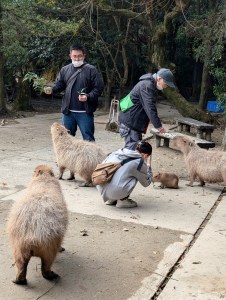
- 3 humans, 3 adult capybaras, 1 baby capybara
-
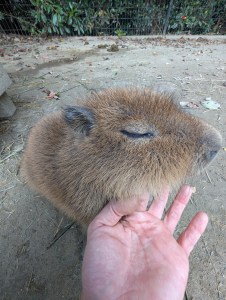
- Pet the baby!
-

- Twofer
-
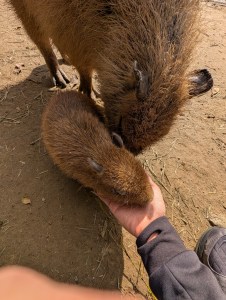
- Mom says it’s okay.
-

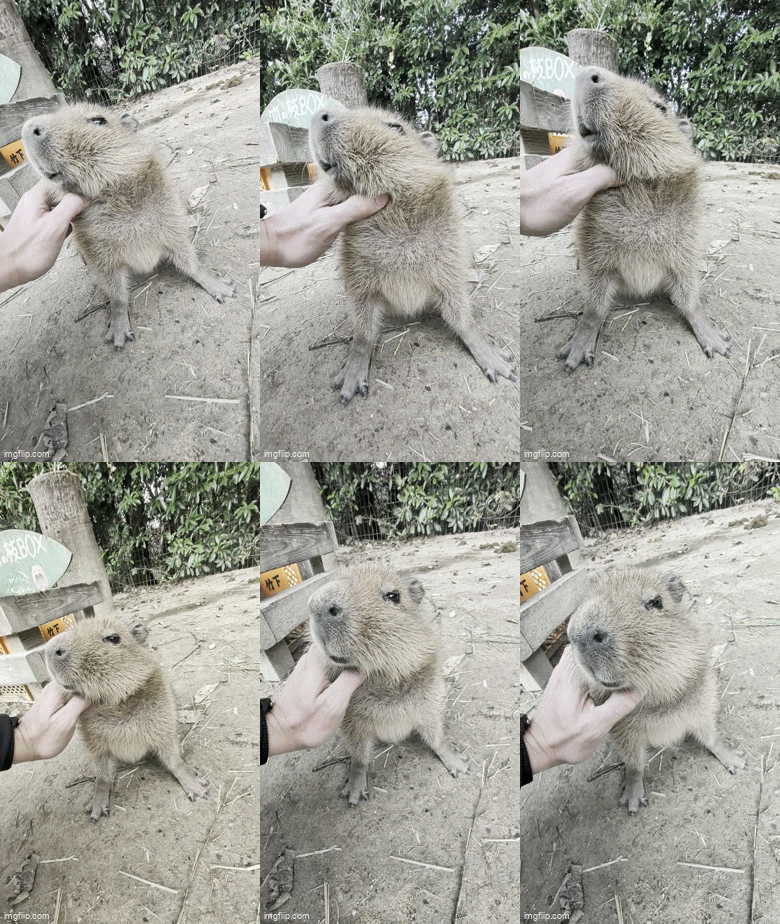
- Chin scritch
-
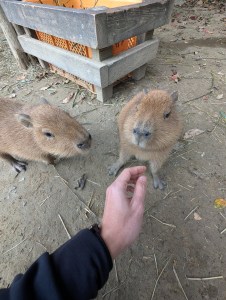
- Taking turns
-

- More of that chin scratch, please!
-
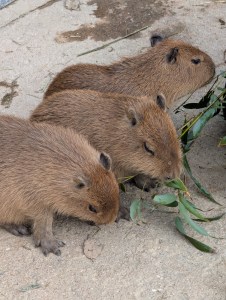
- Bamboo foliage was Dobby’s favorite, too!
So, where is the onsen? Keep going, if you can stop petting those babies!
-
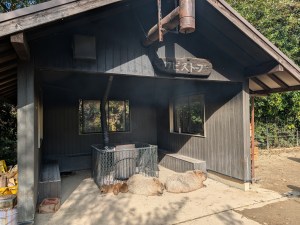
- Here’s the family, cozying up to their big heater.
-
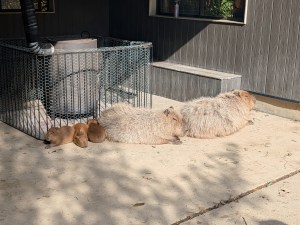
- I’m glad Dobby didn’t see this. He had only a small heater, but he loved it.
-
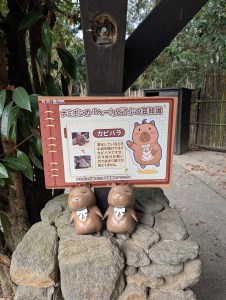
- Sorry. The only word I recognize is “capybara.” Do you see it?
-

- I used to dump buckets of hot water into Dobby’s molded plastic wading pool. Glad he didn’t see this, either.
Here’s a bonus video! Just because I discovered it while writing this post. Not the Biopark, but probably Japan. He’s hungry! He’s just a Guinea Big- they are always begging, too!
~~~~~~~~~~
Special thanks to my friend, Frank Song, who traveled to Japan in search of the ultimate capybara experience and sent me these photos and videos!
I’m always looking for photos of capybaras- in the wild, at the zoo, in your kitchen? The Capybara Spotters are hard at work, helping me to update my zoo list. Let me know what you find out there! I’ll be updating that zoo list to include capybara encounters in the next couple months, so if you have anything to contribute, don’t hold back!
~~~~~~~~~~
This blogpost was brought to you by Stacy’s Funny Farm, a non-profit pet sanctuary where Dobby lived. Please consider a donation so we can continue to care for our extensive menagerie. We especially appreciate monthly giving- the PayPal portal offers that option. If you want to help but are short on cash, head over to Dobby’s YouTube channel. We’re monetized and those ads pay out nicely, so please watch, share, and subscribe.
This post contained links to Wikipedia. Let them know how much you appreciate their ongoing effort to keep us informed.
Stacy’s Funny Farm is a §501(c)(3) non-profit organization.
Consider giving through your Donor-Advised Fund. Use our Tax ID (EIN): 47-1397412 to recommend a grant from your DAF.
 Dobby the Capybara