
Five capybaras were caught smuggling cocaine, marijuana, and firearms in Costa Rico. The two adults and three underage “carpinchos” are not citizens of Costa Rico, because everyone knows capybaras do not live north (west, actually if you look at the map) of the Panama Canal. The capybaras are in custody but refuse to speak to Costa Rican authorities.
That doesn’t seem quite right, does it? Running that article back through Google translate, it becomes clear that the capybaras in question are part of the contraband.

At first I pictured it like this. (Except for the tail. Why do artists insist upon adding a tail?)
Police chase in Costa Rica ends with seizure of cocaine, marijuana, knives — and 5 massive swimming rodents
 “The police action was important and shows the concurrence where the drug world coincides with the introduction of non-native species,” Security Minister Mario Zamora said.Authorities said that in addition to the animals and drugs, knives and plastic spurs were seized.
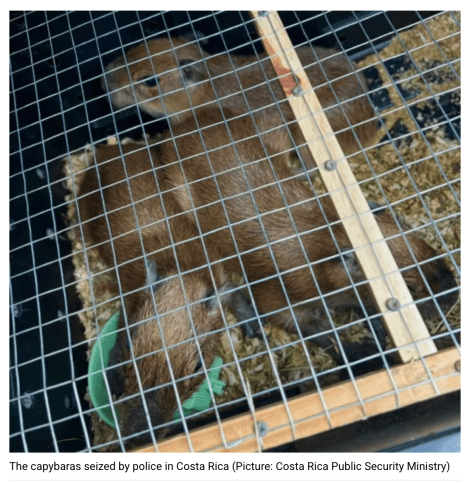 “This is the first recorded case of illegal capybara trafficking in Costa Rica, marking a milestone in the fight against the illegal wildlife trade,” the Public Security Ministry said in a statement.According to WWF, the average size of capybaras is about 108 pounds, or roughly the size of an adult wolf. Capybaras have webbed feet and nostrils on top of their head, which helps them to swim fast and stay mostly submerged for long periods of time.The unusual drug bust in Costa Rica comes just days after prison guards in the country intercepted a drug-smuggling cat as it jumped over the periphery fence at night with marijuana and crack taped to its body.



It has not been a picnic for these capybaras. Like other animals transported for the pet trade, their smugglers had no clue about the needs of these animals. We’ve all seen photos of parrots stuffed into suitcases, snakes down some idiot’s pants, crates full of pangolins. When I brought Dobby home, his breeder gave him a potato for the ride home. He explained that potatoes provide enough food and water to keep them going for a while. It seemed funny at the time, but Dobby grew to love potatoes, and when you think about it, potatoes provide fiber and water in a very efficient package. Nobody told these smugglers about shipping potatoes.
One of the five capybaras rescued in the Costa Rican operation has died.
One of the five capybaras (the world’s largest rodent) rescued days ago in Costa Rica by the police has died due to the severe physical deterioration suffered during its captivity, the newspaper AM Prensa reported today.
The poor health of the smallest of the five animals rescued in the action against illegal wildlife trafficking carried out by the agents was insufficient to overcome the consequences of inadequate nutrition, explained the center’s veterinarian Isabel Hagnauer, according to the newspaper.
“The capybara showed signs of prolonged starvation. Its death is a sign of the devastating impact of the illegal wildlife trade,” stated the specialist from the Rescate Wildlife Rescue Center.
According to the doctor, the other four animals remain in quarantine, under strict veterinary supervision, although they show signs of severe malnutrition, acute stress, and possible damage to their immune systems, and they could still be suffering from undiagnosed diseases.
Authorities have so far refrained from providing details about the operation that rescued the five animals, according to AM Prensa, but it is presumed they were going to be sold as exotic pets, a practice prohibited in the country but still prevalent due to high demand and the ignorance of smugglers.
“Illegal wildlife trafficking is one of the most lucrative criminal activities in the world, surpassed only by drug trafficking, human trafficking, and arms trafficking,” Center officials noted.
The capybara, considered the largest and heaviest living rodent in the world, is a species native to South America and belongs to the Cavida family. It is also known as the capybara, chigüire, chigüiro, or ronsoco.
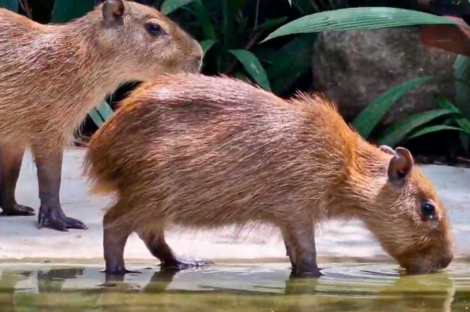
Looks a bit thin to me for one that young. (photo from news article- may not be one of the smuggled animals)
There is nothing positive to say about smuggling animals for the pet trade. It never comes to any good for the animals. It is unfair competition to the legitimate breeders who follow the rules and take care to ship animals in the most humane way possible.
Wildly speculating here- because these capybaras are in Costa Rica- they were likely nabbed from the closest capybara habitat. That would be Panama, but my money is on Columbia, based on their reputation for smuggling cocaine and marijuana, and they probably came through the notorious Darien Gap. But don’t quote me.
-

- Party Animal A
-

- Party Animal B
That would probably make these Lesser Capybaras (Hydrochoerus isthmius.) Their limited range is from Columbia and Venezuela to Panama. In 2016 they were assessed by the IUCN red list as Data Deficient. That means they don’t know how many there are or whether their population is decreasing. It probably isn’t the best place to import them from, especially considering that Hydrochoerus hydrochaeris, the common capybaras we know and love, are a species of least concern. Their range is all of South America except Chile. The Andes appears to be a formidable barrier for capybaras, isolating the two species.
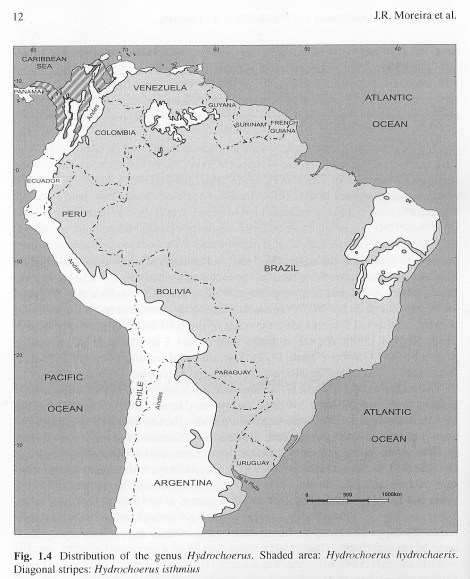
As the demand for pet capybaras continues to grow, so will the smuggling. When you decide to get your pet capybara, do your research. Meet your breeder. Avoid “bargain-priced” animals. Capybaras are wild animals and your success with taming a very young animal is usually better than starting with an adult. Get on a waiting list with your selected breeder and drive to get it if you can. We can discourage capybara trafficking if we make sure we are buying domestic bred capybaras and allow the breeders to legally import them to introduce new bloodlines.
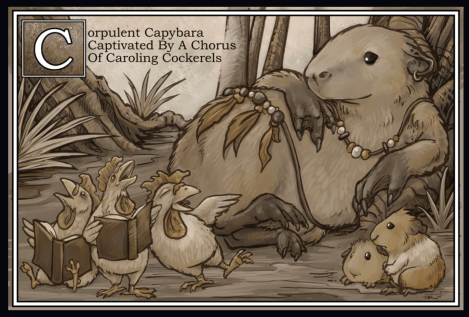
Capybaras are challenging pets. Cat and dog experience is not enough preparation for owning a large headstrong and occasionally skittish animal. I don’t recommend specific breeders. Do your research- get off the internet and go to the zoo. Find a pet capybara to visit. Talk to owners. You will find the breeders if you look hard enough. Don’t be fooled, though. Finding the breeder is the easy part!
~~~~~~~~~~
This post was brought to you by Stacy’s Funny Farm, a non-profit pet sanctuary. We hope you will be inspired to make a donation. We especially appreciate monthly giving- the PayPal portal offers that option. If you want to help but are short on cash, head over to Dobby’s YouTube channel. We’re monetized and those ads pay out nicely, so please watch, share, and subscribe.
Stacy’s Funny Farm is a §501(c)(3) non-profit organization.
 Dobby the Capybara