
Rodent teeth continually grow, therefore they chew. Everybody knows what a mouse hole looks like and that a tiny mouse chewed it into existence. Beavers chew down big trees for their dams, lodges, and then they eat it for lunch. Capybaras eat grass and corn on the cob, but what else do they eat?
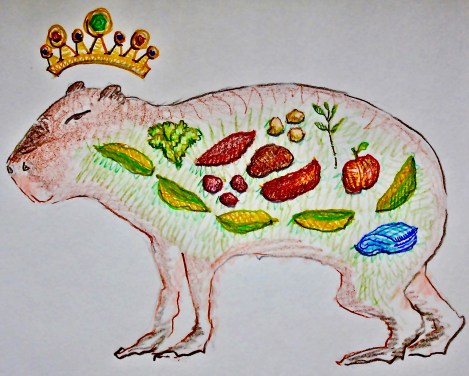
Capybaras eat almost everything in your garden that grows. If you have a pond with plants, you can kiss them goodbye. Here is a video of Snapper finishing off a clump of iris in his pond, ironically the home of a formidable snapping turtle named Nessie. Former home.
Those of you familiar with Dobby know that he ate several swimming pools. He had a couple of techniques. Usually he would wait until I wasn’t paying attention, and then casually turn his big head and take a bite out of whatever was nearby. That worked best for the top rim of the pool. The lower bites came from inside the pool. He would dive down, get up some speed, and then ram the side of the pool, ricochet style, from one side to the other. Eventually I would notice the water level going down and look for telltale spouts creating puddles around the outside.
-
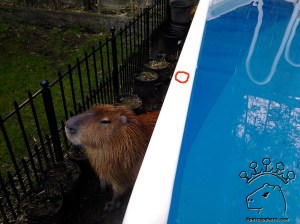
- The top rim was especially vulnerable.
-
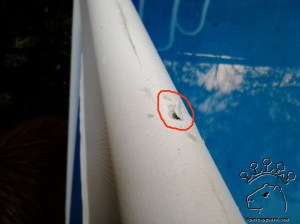
- It was too easy to sneak a nip.
-
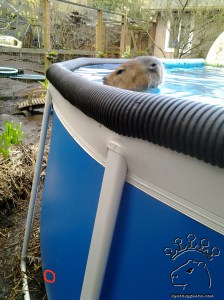
- Drainline makes an inexpensive reinforcement.
-
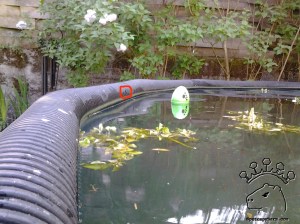
- Dobby bit that, too, but he couldn’t bite through to the pool itself.
-
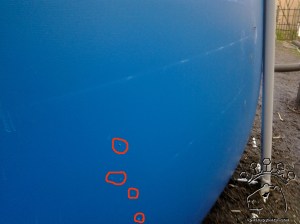
- These holes were bit from the inside of the pool.
-
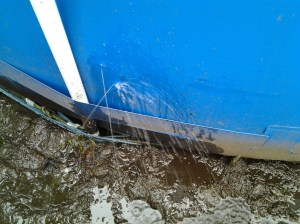
- These bite holes are neaarly impossible to fix, and anyway, he would just bite more.
Garibaldi had a subtle technique. This was a brand new wading pool and he loved it! Dobby had one, too, and liked to push the sides down to get rid of the water quickly. Gari took tiny nips at the wrinkled bottom, ripping strips of vinyl when he got a nice big hunk. Watch twice to appreciate his skill.
After he ate a few cheap vinyl pools, I tried a steel walled pool- with a vinyl liner. That’s when he discovered Gari’s technique.
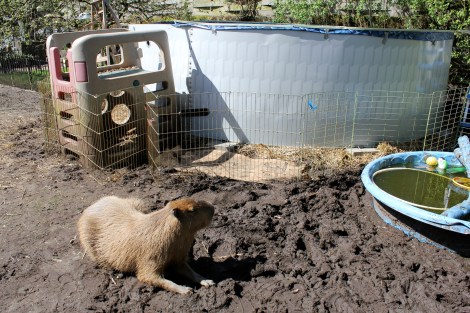
It lasted less than a week.
I couldn’t blame him for trying the potted plants. They’re special, right?
-
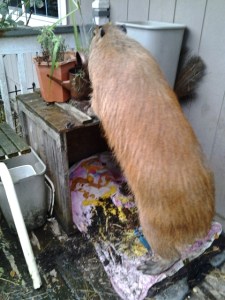
- Herbs are yummy!
-
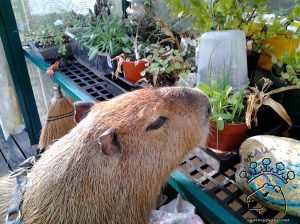
- Greenhouse plants are the best!
-
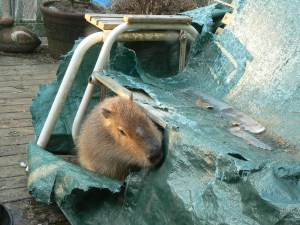
- Everything green is a plant, right?
It’s hard to capybara-proof the garden. Everything out there is vulnerable. I use heavy-duty contractor hoses, now, protected inside drainline when possible.
-
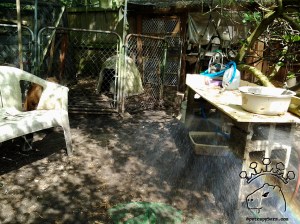
- A new sprinkler! Note the lurker behind the bench.
-
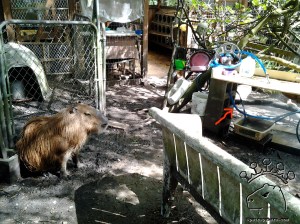
- Dobby admires his handiwork.
-
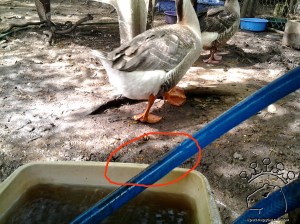
- Neat tidy little nip.
-
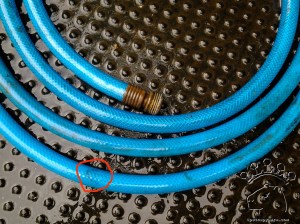
- My fault for buying cheap hoses.
Dobby ate his toys, too. He didn’t really eat the pool noodles. He bit off pieces that floated around like escapees from the Great Pacific Garbage Patch. He popped rubber balls, chewed his precious White Rabbit Rugs, and every blanket.
-
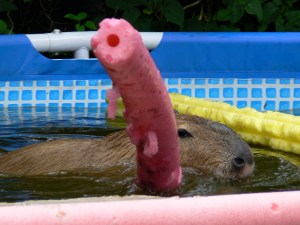
- Pool noodles. Note the low water level.
-
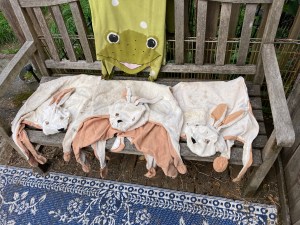
- A holey frog and three unstuffed, deflated rabbits.
-
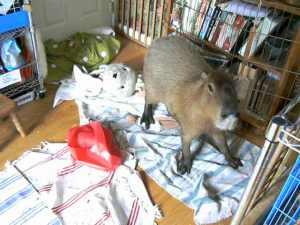
- Small rubber ball
-
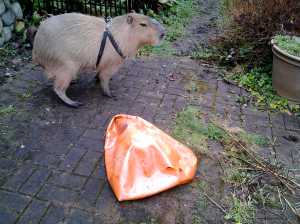
- Large rubber ball
Then there were the shoes. I went through a couple pairs of boots each year.
-
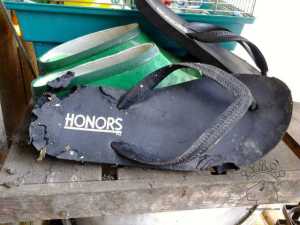
- Delicious!
-
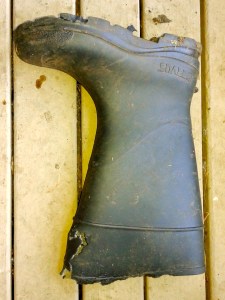
- One of dozens
-
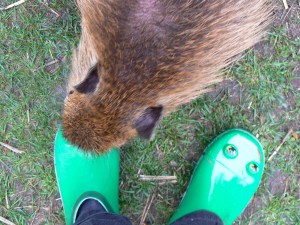
- Eyeballs!
The house was considered edible. He had his own little doorknob, snout height, at the kitchen door. I still have a jar full of destroyed wooden doorknobs. He ate plenty of blankets, but my bed dust-ruffle was a favorite.
-
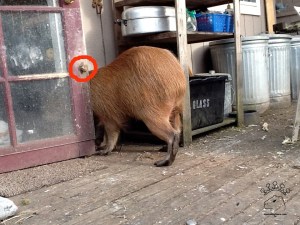
- There is a plexiglass shield on the door because he was eating the wood between the panes of glass.
-
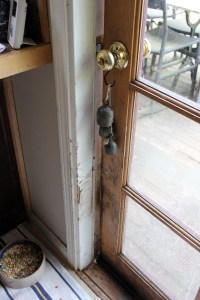
- Here’s the door frame inside. the door accidentally latched one day and he panicked when he couldn’t push it open. Most of this damage happened in under five minutes.
-
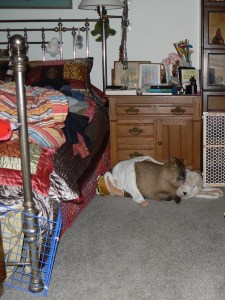
- Once the dust ruffle was shredded, I put a fence to prevent him from exploring other dangling bedding.
-
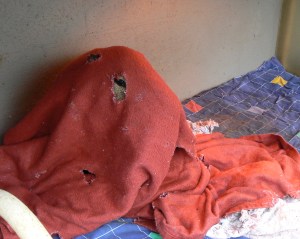
- Peek A Boo!
After all this time, we still hear from people who think capybaras (So chill!) make good indoor pets. I suppose some might, but it’s good to remind yourself that these are wild animals adapted to a mild tropical climate where they spend their life outdoors- 24/7. You can tame them but they are never as docile as a domestic dog or cat.
-
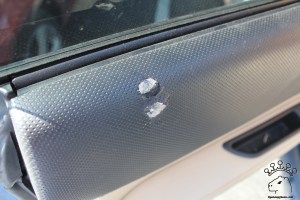
- The car door panel. He also took a bite out of the center console.
-
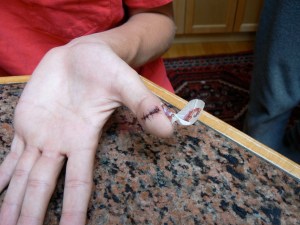
- This happens, too. He resented my daughter taking my place while I was away. It was an accident, but it happened. Not food.
~~~~~~~~~~
Videos on permanent loan from Melanie Typaldos, president of the ROUS Foundation.
~~~~~~~~~~
This post was brought to you by Stacy’s Funny Farm, a non-profit pet sanctuary. We hope you will be inspired to make a donation. We especially appreciate monthly giving- the PayPal portal offers that option. If you want to help but are short on cash, head over to Dobby’s YouTube channel. There are hundreds of capybara videos there. We’re monetized and those ads pay out nicely, so please watch, share, and subscribe.
Stacy’s Funny Farm is a §501(c)(3) non-profit organization.
 Dobby the Capybara